
The part of philosophy called Epistemology is concerned with knowledge. What is knowledge? When can we say that we know something? Philosophers since ancient times have been pondering these sorts of questions.
In the post on Descartes, we saw that the only thing that we could be sure of knowing was that we had a mind. Descartes discovered this by deductive reasoning. Deducting reasoning, when correct, is absolute. The following argument is an example of deductive reasoning:
(1) Bachellors are single, middle-aged men.
(2) Bob is a single, middle-aged man.
(3) Therefore, Bob is a bachellor.
We deduced from the fact that Bob was a single, middle-aged man, that he must be a bachellor. Bishop George Berkely(1685 - 1753) used similar reasoning to show that the world didn't exist:
(1) We percieve ordinary objects (mountains, houses, etc.)
(2) We percieve only ideas
(3) Therefore, ordinary objects are ideas
That is, what we see of this world is only in our minds - it isn't really there. Descartes also showed that we couldn't be positive about physical reality.
The problem is, when we want to show that what we see is real, we have to use abductive arguments. Abductive arguments are arguments to the best explanation:
(1) Things fall downwards
(2) The world looks flat
(3) Therefore, the world is flat
As you can see, abductive arguments can sometimes be wrong. We don't have the certainty that comes with deductive reasoning. But, nevertheless, there are good abductive arguments:
(1) Both you and I percieve a red chair
(2) Therefore, there is a red chair before us, causing us to perceive it (rather than it existing only in our minds)
So now the challenge is to come up with a theory which accurately describes how we can know that there is a red chair before us. We come up with conditions that we need to satisfy. These were the conditions that were stated by the ancients:
If p is any statement (eg. there is a red chair before us), then we know that p only when:
1. p is true
2. p is justified
3. we believe that p
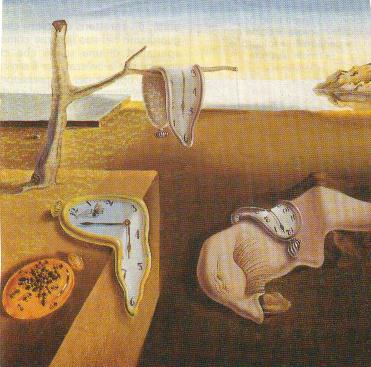
These three conditions were widely accepted to be sufficient for having knowledge. However, it was only forty years ago that Edmund Gettier found a serious problem with it. He asks us to imagine that a person, let's call him Bob, who wants to know the time. It is 10:00. Bob looks at the clock and it says that it is 10:00. Naturally, he believes that it is 10:00. So Bob has a true, justified belief; according to the above theory, he has knowledge.
But let us also imagine that the clock had stopped, and it was only by sheer chance that it had shown the right time. Does Bob know that it is 10:00? Intuitively, it would seem that he did not: if the clock had shown that it was 10:30, then he would have thought that it was 10:30. So the classical theory is not an accurate theory of knowledge. For decades now, epistemologists have been trying to successfully overcome the problem of Gettier clocks.
Further Reading:
- Edmund, L. G., 1963, "Is Justified True Belief Knowledge?", Analysis Vol. 23, pp. 121 - 23


4 comments:
I found the use of Venn diagrams as a graphic way of determining if the conclusions arrived after deductive or abductive arguments were right or wrong.
In medicine, we face the task of determining if the conclusions that a scientific paper shows are biased or unbiased. Much of the "knowledge" acquired through the years has proven to be erroneous. An example of this is the conclusion that hormone replacement therapy was beneficial for the post menopausal woman's health.
thanks
ray ban uk, vanessa bruno, sac guess, air force, tn pas cher, coach outlet, michael kors, burberry outlet online, nike blazer, lululemon, vans pas cher, mulberry, michael kors, burberry, nike free run uk, nike roshe, ray ban pas cher, michael kors outlet, hollister pas cher, hollister, north face, hermes, new balance pas cher, coach purses, true religion outlet, nike air max, replica handbags, ugg boots, michael kors outlet, hogan, nike air max, true religion jeans, abercrombie and fitch, kate spade handbags, lacoste pas cher, true religion jeans, michael kors outlet, converse pas cher, coach outlet, timberland, nike air max, michael kors, ugg boots, michael kors outlet, true religion jeans, north face, michael kors, ralph lauren uk, oakley pas cher, michael kors outlet
bottes ugg, ugg pas cher, louis vuitton, pandora jewelry, moncler, moncler, doudoune canada goose, replica watches, louis vuitton, moncler, juicy couture outlet, moncler, juicy couture outlet, ugg,uggs,uggs canada, canada goose, ugg,ugg australia,ugg italia, pandora charms, canada goose, links of london, canada goose outlet, pandora charms, canada goose uk, canada goose, marc jacobs, moncler, wedding dresses, louis vuitton, canada goose outlet, karen millen, louis vuitton, moncler outlet, sac louis vuitton pas cher, coach outlet, moncler, swarovski, ugg boots uk, toms shoes, moncler, pandora jewelry, canada goose, montre pas cher, thomas sabo, supra shoes, hollister, swarovski crystal
Post a Comment